• Blog
  • Careers
  • Contact Us
Schedule a 15-Min Call
TechCXO Logo
Schedule a 15-Min Call
  • Fractional Leadership
        • Functional Roles

        • CFO
        • CSO
        • CRO
        • CMO
        • CTO
        • COO
        • CIO
        • CEO
        • CPO
        • CISO
        • CHRO
        • Recruiter
        • Project Management
        • Executive & Team Coaching
        • Office of the CFO
  • Finance & Accounting
    • Finance and Accounting Services
      • Accounting Systems
      • Internal Controls
      • Monthly Close
      • Cash Management
      • Financial Reporting
      • Capital Requirements
      • Board Support
    • Financial Strategy
      • Forecast and Modeling
      • Debt and Equity Financing
      • KPIs
    • Transaction Support
      • Due Dilligence
      • M&A
    • Investor & Transaction Services
      • Front-End Due Dilligence
      • Post-Deal Integration and Assimilation
      • Outsourced Operating Partner Capabilities
      • Transaction Assistance
      • Workouts, Turnarounds and Distress
  • Revenue Growth
    • Revenue Operations
      • Metrics
      • Enablement and Training
      • Processes and Methodologies
      • Revenue Tech Stack
      • Messaging Alignment
    • Marketing Strategy and Services
      • Go-to-Market Planning
      • Target Marketing
      • Product-Market Fit
      • Brand Building
      • Demand Generation
      • Performance Marketing
    • Sales Excellence
      • Key Account Management
      • Opportunity Management
      • Partner and Channel Development and Execution
      • Sales Excellence Academy
    • Investor & Transaction Services
      • Market and Competitive Review
      • Quality of Programs
      • Forensic Sales Health, Pipeline and Forecast Analytics
  • Product & Technology
    • Technology Leadership
      • Product Development
      • Architecture & DevOps
      • Development Services
      • Emerging Technology
    • Product Strategy
      • Strategic Roadmaps
      • New Product Launch
      • Product Led Growth
      • Product Services
    • IT Services
      • IT Leadership
      • IT Strategy
      • Project & Program Management
    • Information Security
      • Cybersecurity
      • Security & Risk Assesments
      • HIPAA,SOC2,PCI Audit Prep
    • Investor & Transaction Services
      • Technical Due Diligence
      • Technical Assessment
      • Post-Close Integration
      • Ongoing Fractional
  • Strategy & Execution
    • Strategy, Planning and Alignment
      • Mission, Vision and Shared Purpose
      • Corporate Strategy
      • Organization Alignment
      • Operational Excellence
      • Market / Business Assessment
      • Investment Cases
      • Operating Model Design
      • Asset and Behavior Assessment
    • Transformation Execution
      • Operational Model Execution
      • KPIs and Goal Attainment
      • Cross-Functional Initiatives
      • Change Management
      • Digital Transformation
      • Process Improvement
    • Growth Capabilities and Development
      • Go-to-Market Strategy
      • Market Entry and Expansion
      • Strategic Alliances
      • Strategic Negotiations
      • Product & Services Design, Portfolio, Pricing and Management
  • Human Capital
    • HR
      • Policy, Process, Standards and Compliance
      • Employee Relations and Development
      • Compensation and Benefits
    • Organizational Development
      • Culture Building
      • Scale a Business
      • Organizational Structure and Development
      • Performance Management
    • Recruiting
      • Search
      • Project Planning
      • Sourcing
      • Screening
      • Hiring
  • Industries
    • Industries

    • Consumer & Retail
    • Energy & Power
    • Financial Services
    • Healthcare & Life Sciences
    • Industrials
    • Media & Communications
    • Real Estate
    • Technology & Software
    • Business Services
    • AI
  • About Us
    • About Us

    • History
    • Insights
    • People
    • Contact Us
    • Clients
    • Locations
    • Careers

TechCXO Launches Redesigned Website Focused on the Power of Fractional Leadership

ATLANTA, GA, July 7, 2025 – (GlobalNewswire) – TechCXO, a pioneer in on-demand executive talent, today announced the debut of its newly redesigned website, available at https://www.techcxo.com/. The new digital presence is built to give visitors a clearer, more direct understanding of the firm’s innovative fractional executive model, a service it has perfected over two decades.

The redesign initiative was driven by a desire to better articulate the tangible outcomes and strategic advantages clients gain from embedding fractional C-suite talent into their operations. The site now vividly illustrates how TechCXO’s approach helps businesses accelerate growth, navigate critical inflection points, and achieve their goals with greater agility.

“We wanted our online presence to be a true reflection of the value we deliver every day,” said Kent Elmer, Firm Managing Partner at TechCXO. “This new website is more than just an update; it’s a strategic tool designed to show business leaders how our fractional model can be a game-changer for them. It clearly communicates how our seasoned executives integrate with client teams to drive real-world results.”

Key features of the new site include a streamlined user experience, in-depth explorations of the benefits of the fractional model, and case studies on the firm’s expertise in finance, technology, human capital, executive operations, and go-to-market projects.

TechCXO encourages business leaders to tour the new website and discover how fractional leadership can fuel their company’s success.

About TechCXO: For over 20 years, TechCXO has been the premier provider of fractional executives. The firm’s partnership of over 100 highly experienced, C-level professionals provides on-demand expertise to help clients overcome challenges and capitalize on opportunities. As a flexible and potent alternative to traditional hiring, TechCXO equips companies with the leadership they need to succeed.

Media Contact:
Lisa Bankston
TechCXO
lbankston@hingepr.com

Understanding Product Management Job Titles: Roles and Responsibilities

We all know that the trajectory of your company depends largely on the brilliance and execution of your product team. But with an array of job titles floating around, it’s easy to get lost in the maze.

So, who does what exactly? 

We’re here to demystify the key roles that drive product innovation and leadership: the Chief Product Officer (CPO), Head of Product, VP of Product, and more. Understanding these roles isn’t just about knowing the titles—it’s about recognizing the unique contributions each position brings to the table. By the end of this post, you’ll have a clear picture of how each role shapes the product landscape and steers your company toward success. Ready to dive in? Read on.

Product Management Hierarchy and Job Titles

The world of product management is vast, with each role playing a crucial part in bringing innovative tech solutions to life. From crafting the initial vision to fine-tuning the final product, every position in the hierarchy contributes to the success of a project.

But what does each title mean? 

Let’s break it down.

Associate Product Manager

Embarking on the path of product management? The Associate Product Manager (APM) role is a great place to start. APMs support seasoned product managers, helping with tasks like user feedback collection and shaping product roadmaps. This foundational role provides hands-on experience and is crucial for understanding the basics of product management.

Junior Product Manager

Junior Product Managers take it up a notch from the APM role. With more experience, they handle greater responsibilities and work more independently. They dive deeper into product strategy, solve problems, and execute plans while still receiving guidance from senior team members. This role bridges the gap between learning and leading.

Product Manager

Product Managers are in charge of specific products or features. They balance customer needs with business goals, ensuring the product vision becomes a reality. This role involves managing cross-functional teams, prioritizing features, and keeping projects on track. Product Managers play a key role in translating strategy into execution.

Senior Product Manager

Senior Product Managers bring a wealth of experience to the table. They handle larger projects and mentor junior team members, blending leadership with hands-on work. Senior Product Managers lead product initiatives, define strategic direction, and drive innovation, ensuring everything runs smoothly while fostering team growth.

VP of Product

The VP of Product oversees the entire product team, focusing on operational efficiency, roadmapping, and cross-department collaboration. They ensure that products align with strategic goals and meet customer needs. The VP coordinates efforts across the organization, driving the product vision forward and ensuring alignment with the company’s broader objectives.

Head of Product

The Head of Product is the strategic leader of the product team. They set the overarching direction, allocate budgets, and ensure products hit the market’s sweet spot. Working closely with other executives, the Head of Product aligns the product strategy with the company’s goals, driving long-term success.

Chief Product Officer (CPO)

At the top is the Chief Product Officer (CPO), a key executive who shapes the long-term product vision and aligns it with your company’s overall strategy. From ideation to market delivery, the CPO oversees your entire product lifecycle, ensuring that the product team’s efforts are cohesive and strategically aligned with your company’s growth objectives.

Curious about how these roles interconnect and drive your company forward? Read on to uncover the secrets behind each position’s impact and how they work together to innovate and excel.

Key Responsibilities of Product Management Roles

Understanding the responsibilities at each level of product management can be a game-changer for your company. Knowing who does what can illuminate the path to streamlined operations, seamless collaboration, and innovative product development. 

Let’s dive into what each role entails and the essential skills needed to excel. This insight will help you leverage every role to optimize your product management strategy.

Chief Product Officer (CPO)

The CPO is the visionary at the helm, setting the long-term product direction. They ensure that the product strategy aligns seamlessly with overall business goals. Overseeing the entire product development process, they work closely with other executive members to keep the product vision on track and integrated with the company’s broader objectives.

Head of Product

The Head of Product takes the strategic vision and turns it into actionable plans. They develop and implement product strategies, ensuring the team’s efforts meet your company standards. Managing budgets and resource allocation is crucial, as is leading recruitment and fostering team development. This role is about making sure the team has everything it needs to succeed.

VP of Product

The VP of Product is the operations master, building and optimizing the product development process. They coordinate closely with engineering, marketing, and support teams to ensure smooth collaboration. A key focus is on design specs and user experience, ensuring that products not only function well but also delight users. Gathering and implementing customer feedback is a constant priority to refine and enhance the product.

Senior Product Manager

Seasoned and savvy, Senior Product Managers handle larger, more complex projects and mentor junior team members. They blend leadership with hands-on work, ensuring everything runs smoothly while fostering team growth. Senior Product Managers often lead product initiatives, define strategic direction, and drive innovation. Their experience allows them to anticipate challenges and steer the team toward successful outcomes.

Product Manager

Product Managers are in the driver’s seat for specific products or features. This role revolves around strategy and execution, balancing customer needs with business goals. Product Managers are pivotal in ensuring the product vision translates into reality. They manage cross-functional teams, prioritize features, and keep projects on track. The level of autonomy and authority in this role can vary depending on your company’s size and structure.

Junior Product Manager

Junior Product Managers take it up a notch from the APM role. With more experience, they handle greater responsibilities and work more independently. They dive deeper into product strategy, solve problems, and execute plans while still receiving guidance from senior team members. This role bridges the gap between learning and leading.

Associate Product Manager

The Associate Product Manager (APM) role is a great place to start. APMs support seasoned product managers, helping with tasks like user feedback collection and shaping product roadmaps. This foundational role provides hands-on experience and is crucial for understanding the basics of product management

Understanding the key responsibilities at each level of product management is essential for leveraging both full-time interim services. As you grasp these roles, you can better identify the specific expertise required to propel your productsand business to new heights. 

Essential Skills for Product Management Leaders

To help your team thrive in product management, you’ll want to identify a diverse skill set that goes beyond the basics. Let’s break down the essentials that make great product management leaders:

Leadership

Great product management leaders inspire and guide their teams toward achieving common goals. A strong leader doesn’t just direct; they motivate and cultivate a collaborative, high-performing environment. As they empower your team and foster a sense of ownership, your team can drive innovation and success.

Empathy

Understanding and prioritizing customer needs is at the heart of effective product management. Great product managers put themselves in the users’ shoes, crafting solutions that truly resonate. Empathy enables them to connect with your audience on a deeper level, ensuring that your product meets real-world needs and desires.

Communication

Effective collaboration across departments is key to successful product management. Whether coordinating with engineers, marketing teams, or presenting to stakeholders, clear and persuasive communication is essential. It’s all about bridging gaps, ensuring everyone is on the same page, and driving projects forward smoothly.

Business Acumen

Aligning product strategies with overarching business objectives is crucial. This skill ensures that product decisions support the company’s financial health and strategic goals. As they understand the bigger picture, product managers can make informed choices that contribute to your company’s success and growth.

Analytical Skills

Interpreting market data and performance metrics to make informed decisions is vital in the fast-paced tech landscape. Being able to analyze and act on data helps product managers stay ahead of trends, optimize product features, and improve user experiences. Great analytical skills are about making data-driven decisions that lead to better outcomes.

Technical Knowledge

Relating to technical teams and understanding their challenges is essential for effective product management. While they don’t need to be an engineer, a solid grasp of technical concepts helps them make informed decisions, communicate more effectively with your team, and foster better interactions.

Problem-Solving

Navigating complex product development issues with ease is a hallmark of a great leader. The ability to troubleshoot and find solutions quickly is invaluable. It’s about thinking on their feet, adapting to changing circumstances, and turning challenges into opportunities for growth.

Marketing Insight

Ensuring products are market-ready and meet customer demands is crucial. A keen sense of market trends and customer needs ensures the product’s success in the marketplace. When they stay attuned to what your customers want and how the market is evolving, they create products that not only meet but exceed expectations.

Ready to see how these roles and skills come together to drive innovation and success? Read on to discover the synergy behind effective product management and how you can harness these skills to lead your team to new heights.

Building a High-Performing Product Team

Creating a successful product starts with building a high-performing team. Here’s how to assemble and nurture a team that drives innovation and achieves remarkable results.

Recruiting Top Talent

The foundation of any great product team is its people. Look for individuals who are not only skilled but also passionate about product management. Seek out candidates with a mix of technical expertise, creative problem-solving abilities, and strong communication skills. Don’t just focus on experience; consider their potential to grow and contribute to the team’s vision.

Fostering a Collaborative Culture

A high-performing product team thrives on collaboration. Encourage open communication and idea-sharing across all levels. Foster an environment where team members feel comfortable voicing their opinions and challenging the status quo. This culture of collaboration leads to more innovative solutions and a stronger, more cohesive team.

Continuous Learning and Development

Invest in your team’s growth by providing opportunities for continuous learning and development. Offer training programs, workshops, and access to industry conferences. Encourage team members to pursue certifications and stay updated on the latest trends and technologies. A team that is constantly learning is better equipped to tackle new challenges and drive the product forward.

Clear Roles and Responsibilities

Ensure that each team member understands their role and responsibilities. Clarity in roles helps prevent overlap and confusion, allowing the team to function more efficiently. Regularly review and adjust roles as needed to adapt to changing project requirements and team dynamics.

Empowering Team Members

Empower your team by giving them the autonomy to make decisions and take ownership of their projects. Trust in their expertise and judgment, and provide the support they need to succeed. Empowered team members are more motivated, engaged, and committed to the product’s success.

Effective Communication

Effective communication is the backbone of a successful product team. Implement regular check-ins, team meetings, and project updates to keep everyone aligned and informed. Leverage tools and platforms that facilitate seamless communication, especially if you’re working with remote or distributed teams.

Recognition and Reward

Recognize and reward your team’s hard work and achievements. Celebrate milestones and successes, both big and small. Acknowledge individual contributions and show appreciation for the team’s collective efforts. Positive reinforcement boosts morale and motivates the team to continue striving for excellence.

Building a high-performing product team requires intentionality and effort, but the results are well worth it. With the right people, culture, and practices in place, your team will be poised to create products that not only meet but exceed expectations. 

Charting the Course to Product Mastery

As we navigate the intricate landscape of product management, one thing becomes clear: the power of a well-structured team cannot be overstated. From understanding the nuanced roles within the hierarchy to building a cohesive and high-performing team, every piece of the puzzle is crucial for driving innovation and achieving success.

Embracing the roles of Chief Product Officer, Head of Product, and VP of Product ensures that each aspect of product development is meticulously planned and executed. With leaders who inspire, communicate, and align with business goals, the path to creating exceptional products becomes more defined and achievable.

Investing in your team’s growth, fostering a collaborative culture, and recognizing achievements sets the stage for a dynamic and motivated workforce. Empowered team members, equipped with the right skills and clear roles, will not only meet but surpass the challenges of product management.

Ready to steer your company towards new heights of product excellence? By implementing these strategies, you’ll pave the way for groundbreaking innovations and enduring success. Stay tuned for more insights and strategies that will transform your approach to product management. The journey to mastery is just beginning.

FAQs: Navigating Product Management Roles

What is the role of an Associate Product Manager?

An Associate Product Manager (APM) is an entry-level position where individuals dive into the fundamentals of product management. They support more senior managers, gaining valuable experience and insights that lay the foundation for a successful career in the field.

How does a Head of Product differ from a VP of Product?

While both roles are pivotal, their focuses differ. The Head of Product oversees the entire product team’s strategy and performance, ensuring alignment with company goals and market needs. On the other hand, the VP of Product zeroes in on operational tasks and process optimization, ensuring that product development runs smoothly and efficiently.

What skills are essential for a Chief Product Officer (CPO)?

A Chief Product Officer needs a well-rounded skill set to excel. Key skills include leadership, to inspire and guide the team; strategic vision, to align product goals with the company’s future; empathy, to understand and prioritize customer needs; business acumen, to align strategies with business objectives; and excellent communication skills, to effectively collaborate across departments and with stakeholders.

Can a company have both a Head of Product and a VP of Product?

Absolutely. In larger companies, having both roles is common and beneficial. The Head of Product can focus on overarching strategies and long-term goals, while the VP of Product handles the day-to-day operations and ensures that processes are optimized for efficiency and effectiveness. This dual approach allows for more comprehensive and focused management across different facets of product development.

What are the main responsibilities of a Senior Product Manager?

Senior Product Managers play a crucial role in steering major projects to success. They mentor junior staff, imparting knowledge and guiding their development. Balancing hands-on work with strategic leadership, they ensure that projects are not only executed efficiently but also align with the broader product vision and strategy.

Understanding these roles and responsibilities is vital for structuring effective product teams. Whether you’re a company looking to optimize your product management structure or a professional navigating your career path, these insights will help you make informed decisions and drive success in the ever-evolving field of product management.

Fractional C-Suite Leadership: A Scalable Solution for Growing Businesses

How Fractional C‑Suite Leaders Drive Growth and Flexibility for Today’s Businesses

Running a business today feels less like following a clear roadmap and more like navigating an unpredictable, high-stakes adventure. For those with big dreams but limited resources, every decision can feel overwhelming. 

How do you make the right calls when there’s so much on the line?

That’s where fractional C-suite leadership comes in. It’s a fresh, practical way to get top-tier expertise without breaking the bank—a way to bring seasoned leaders into your corner, so you don’t have to face the twists and turns alone.

Curious about how this could work for your business? Let’s take a look at how fractional leadership can help you tackle the journey ahead.

What is Fractional C-Suite Leadership?

Picture this: a seasoned Chief Financial Officer (CFO) mapping out your financial strategy, a Chief Marketing Officer (CMO) crafting campaigns that drive growth, or a Chief Technology Officer (CTO) spearheading your digital transformation—all bringing their expertise to the table without the long-term financial commitment of a full-time hire. That’s at the heart of fractional C-suite leadership.

How so?

Fractional executives work with your organization on a part-time or project basis, offering the strategic insights and leadership skills of an experienced executive while allowing you to maintain flexibility. They’re not just filling a gap—they’re elevating your business with their unique blend of expertise and adaptability.

This approach isn’t merely about saving money (although it certainly does that); it’s about enabling your business to punch above its weight class. Fractional executives bring fresh perspectives, new ideas, and the ability to deliver immediate impact—exactly what growing or transitional businesses need.

Why Fractional Leadership is a Game-Changer

Fractional leadership is more than a cost-saving solution—it’s a smart, strategic choice that can reshape your business’s trajectory. 

Here’s how:

1. Executive-Level Expertise Without Full-Time Costs

Hiring a full-time C-suite leader is a big commitment, and it doesn’t come cheap. Between salaries, benefits, bonuses, and potential equity, the costs can be prohibitive, especially for smaller or scaling companies. Fractional executives, on the other hand, deliver the same top-tier expertise and leadership without the full-time price tag. Their focus is on driving measurable results, so every dollar spent translates to tangible business outcomes.

2. Scalable, On-Demand Support

Your business’s needs aren’t static, and your leadership strategy shouldn’t be either. Fractional executives provide the flexibility to scale support as your organization evolves. Whether you need a CMO to launch a marketing campaign, a CFO to guide you through an acquisition, or a CTO to oversee a tech overhaul, these leaders adapt to your specific challenges and timeline. They’re there when you need them—and only when you need them.

3. Access to Elite Talent Without the Competition

Top-tier executives often seem out of reach for small to mid-sized companies, but fractional leadership changes the equation. Many fractional leaders have impressive backgrounds, having held senior roles at leading companies and driven transformative results across industries. Now, their expertise is available to businesses that might not otherwise have access to such high-caliber talent.

4. An Unbiased, Results-Driven Perspective

Sometimes, a fresh set of eyes can make all the difference. Fractional leaders bring an outsider’s perspective, unburdened by internal biases, legacy practices, or office politics. This clarity enables them to identify inefficiencies, tackle challenges head-on, and implement solutions that align with your long-term goals. Their focus is solely on delivering outcomes that move the needle for your business.

5. Speed and Efficiency

Fractional executives are adept at hitting the ground running. They don’t require extensive onboarding or months to acclimate; they leverage their experience to quickly assess your needs, develop strategies, and execute plans. This efficiency is particularly valuable for businesses navigating rapid growth, market shifts, or operational pivots.

6. A Bridge to Long-Term Leadership

In some cases, fractional executives can serve as an interim solution while you search for a full-time hire. They provide stability and continuity during transitions, ensuring your business doesn’t lose momentum. In other cases, their expertise might be all you need to address a specific challenge or complete a mission-critical project.

Fractional C-suite leadership isn’t just a temporary fix—it’s a transformational opportunity. It offers growing businesses the chance to operate with the strategic vision and leadership of an enterprise-level organization, all while staying agile and cost-conscious.

If your business is ready to unlock its full potential without taking on the full-time cost, fractional leadership could be the game-changing solution you’ve been searching for.

When Should You Consider Fractional Leadership?

Fractional leadership isn’t just for startups—it’s a strategic asset for businesses of any size. Whether you’re navigating growth, tackling a transformative project, or filling a leadership gap, fractional executives bring the expertise you need, precisely when you need it. 

Here are some of the key scenarios where fractional leadership can be a game-changer:

1. Navigating Rapid Growth

Growth is exciting, but it’s rarely smooth. As your company expands, existing leadership teams can become overwhelmed by the demands of scaling operations, managing new markets, or onboarding additional team members. Fractional executives provide the high-level strategic direction you need to scale effectively. Whether it’s refining processes, optimizing resources, or building a roadmap for sustainable growth, they ensure your expansion doesn’t outpace your organization’s capacity to handle it.

2. Bridging Leadership Transitions

Losing a key executive can leave your company in a vulnerable position. Whether it’s a planned departure or an unexpected resignation, a leadership void can disrupt operations, unsettle teams, and slow momentum. Fractional leaders step in to provide stability, maintaining continuity while you search for the right long-term replacement. Their steady hand during times of change allows your business to move forward confidently without rushing critical hiring decisions.

3. Driving Strategic Projects

High-stakes initiatives demand specialized expertise. Whether you’re launching a groundbreaking product, expanding into a new market, or implementing complex technologies, fractional executives offer the guidance and experience needed to execute your vision successfully. They can lead cross-functional teams, streamline workflows, and identify potential roadblocks before they become costly setbacks—all while ensuring your project stays on track and delivers maximum ROI.

4. Reinforcing Teams During Crisis Management

When unexpected challenges arise—economic downturns, regulatory changes, or sudden shifts in market conditions—it’s easy for teams to become stretched thin. Fractional executives bring a wealth of crisis management experience, helping your business navigate uncertainty with clarity and resolve. Their ability to quickly assess situations and implement actionable strategies can make all the difference in weathering the storm and emerging stronger on the other side.

5. Maximizing Resources for Lean Organizations

For businesses operating on tight budgets, fractional leadership is a lifeline. It allows you to access the strategic insights of top-tier executives without the financial burden of a full-time hire. Whether you’re a startup conserving funds or a mature company seeking operational efficiencies, fractional leaders ensure every resource is optimized for maximum impact.

6. Preparing for Fundraising or M&A

When gearing up for a funding round or exploring mergers and acquisitions, fractional executives can provide the expertise needed to position your company for success. A fractional CFO can craft compelling financial models, while a fractional CMO can refine your value proposition for investors or potential buyers. Their leadership ensures your business is well-prepared for these pivotal moments.

7. Addressing Skill Gaps in Leadership

No leadership team is perfect, and gaps in expertise can become roadblocks to success. Fractional executives fill these gaps with precision, offering deep experience in areas like finance, marketing, or technology. This allows your team to focus on what they do best while ensuring critical initiatives receive the attention and knowledge they require.

If your business is facing rapid change, complex challenges, or resource constraints, fractional leadership might be the solution you’ve been searching for. These seasoned professionals provide the expertise, objectivity, and strategic guidance to help your company thrive—whether you’re building momentum or weathering a storm.

How Fractional Leaders Impact Key Business Functions

Fractional executives aren’t just temporary fixes for leadership gaps—they’re strategic catalysts who take your business to the next level. By offering deep expertise and fresh perspectives, they drive meaningful outcomes across core business functions, ensuring that your organization not only meets challenges but thrives in the face of them.

Finance: Fractional CFOs

A fractional CFO delivers more than just financial oversight—they provide strategic clarity and a roadmap for sustainable growth. Whether you’re scaling, navigating a transition, or preparing for a major milestone, a fractional CFO ensures your financial strategies align with your objectives.

Key contributions include:

  • Cash Flow Optimization: They ensure your business stays financially stable by managing and forecasting cash flow effectively.
  • Budget Development: Fractional CFOs create dynamic budgets that adapt to both short-term needs and long-term growth plans.
  • Fundraising Expertise: From crafting financial models to preparing investor presentations, they help you secure the capital you need.
  • Mergers & Acquisitions: Their expertise in due diligence and valuation ensures smooth transitions during M&A activities.
  • Performance Metrics: By establishing actionable KPIs, they provide a clear view of your financial health and guide informed decision-making.

Fractional CFOs are invaluable partners in managing your financial foundation, helping you maintain stability while achieving your growth ambitions.

Marketing: Fractional CMOs

A fractional CMO transforms your marketing department into a growth engine, blending creativity with data-driven strategies to achieve measurable results.

Key contributions include:

  • Brand Development: They craft a compelling brand identity that resonates with your target audience.
  • Digital Marketing Strategy: From SEO to PPC campaigns, they ensure your marketing efforts deliver maximum ROI.
  • Market Expansion: Whether targeting new regions or niches, they create go-to-market strategies tailored to your business.
  • Customer Insights: Leveraging analytics, they uncover actionable insights to better engage customers.
  • Team Leadership: Acting as both mentor and strategist, they empower marketing teams to align and execute effectively.

Fractional CMOs provide the strategic direction and hands-on expertise to turn your marketing efforts into a powerful driver of business growth.

Technology: Fractional CTOs

Whether it’s streamlining day-to-day operations or preparing for big leaps in innovation, your tech infrastructure needs more than maintenance; it needs a visionary. 

Enter the fractional CTO.

A fractional CTO brings the expertise of a seasoned tech leader with the flexibility to meet you where you are. They ensure your systems not only work smoothly today but also set you up to thrive in the future. Think of them as the architect of your digital success—designing solutions, solving problems, and unlocking new possibilities.

Key contributions include:

  • System Implementation: They oversee seamless adoption and integration of new technologies.
  • Cybersecurity: Fractional CTOs prioritize robust measures to protect your systems and data.
  • Digital Transformation: They lead modernization efforts, including cloud migrations and AI adoption.
  • Scalability: By designing scalable IT frameworks, they future-proof your operations.
  • Technical Team Support: Acting as a translator between tech teams and executives, they align priorities and foster collaboration.

Fractional leaders are more than just a stopgap solution—they’re an investment in your company’s future. By bringing deep expertise, a results-driven mindset, and the ability to adapt to your unique needs, they strengthen your organization across every key function. 

Best Practices for Integrating Fractional Leaders

Hiring a fractional leader is a strategic move, but their success depends on how well they’re integrated into your organization. Proper onboarding, clear communication, and a focus on measurable outcomes are essential to ensuring they deliver maximum value. 

Here’s a closer look at the best practices for integrating fractional executives:

1. Set Clear Goals

Start with the end in mind. What specific outcomes do you want the fractional leader to achieve? Whether it’s launching a new product, streamlining operations, or preparing for fundraising, clearly defined objectives create alignment and focus.

Key considerations:

  • Be Specific: Outline measurable goals, timelines, and deliverables. Instead of broad statements like “improve marketing,” define objectives such as “increase lead generation by 20% over six months.”
  • Prioritize Needs: Identify your most pressing challenges so your fractional leader can hit the ground running.
  • Align with Strategy: Ensure their goals tie directly to your overall business strategy, creating a cohesive plan of action.

Clear goals provide a roadmap for success, ensuring your fractional leader’s efforts are aligned with your vision.

2. Communicate Regularly

Since fractional leaders often work part-time or remotely, communication is the backbone of a productive relationship. Establish a rhythm for check-ins and ensure they’re included in key discussions and decisions.

Key considerations:

  • Schedule Check-Ins: Regularly scheduled meetings help keep everyone on the same page and provide opportunities to address roadblocks.
  • Use Collaboration Tools: Platforms like Slack, Trello, or Asana can streamline communication and provide visibility into ongoing projects.
  • Loop Them In: Make sure fractional leaders have access to essential updates, team meetings, and relevant documents.

Open, consistent communication ensures your fractional leader stays engaged and informed, driving seamless collaboration.

3. Leverage Their Expertise

Fractional leaders are more than just temporary executives—they’re a resource for organizational growth. Maximize their impact by tapping into their knowledge and experience to empower your internal teams.

Key considerations:

  • Encourage Knowledge Sharing: Ask your fractional leader to mentor team members, share best practices, or provide training sessions.
  • Involve Them Strategically: Invite their input on big-picture decisions, even if it’s outside their immediate scope. Their expertise can reveal opportunities you might not have considered.
  • Create Lasting Value: Look for ways their involvement can build capacity within your team, leaving a lasting impact even after their tenure ends.

Leveraging their expertise ensures you get not only immediate results but also long-term benefits for your organization.

4. Monitor Progress

To ensure your fractional leader is delivering value, establish a system for tracking their contributions. Regular assessments help you measure success and adjust their role as needed.

Key considerations:

  • Track KPIs: Use performance metrics to evaluate their impact. Are they achieving the goals outlined at the start of their engagement?
  • Solicit Feedback: Gather input from team members and stakeholders to understand how the fractional leader’s involvement is shaping operations and culture.
  • Refine Their Role: Use insights from progress assessments to fine-tune their responsibilities, ensuring they’re focusing on the areas that drive the most value.

Integrating a fractional leader isn’t just about filling a gap—it’s about unlocking their potential to transform your organization. When done right, fractional leadership becomes more than a temporary solution—it’s a catalyst for sustainable growth and innovation. 

The Future of Leadership is Fractional

Business doesn’t wait, and neither can your leadership. Whether you’re launching a new initiative, scaling to meet demand, or steering through uncharted waters, you need experienced leaders who can jump in and make an impact—fast. Fractional C-suite executives are transforming how companies lead by offering expertise on demand, precisely when and where it’s needed most.

This isn’t just about filling a role; it’s about unleashing potential. Fractional leaders bring fresh perspectives, proven strategies, and the agility to tackle challenges head-on, helping your business thrive in ways you didn’t think possible.

At TechCXO, we connect you with top-tier fractional leaders who understand how to create results that last. Whether you’re preparing for growth, driving innovation, or navigating a critical pivot, we’re here to help you take the next step with confidence.

Let’s start the conversation and explore how fractional leadership can elevate your business to new heights.


Your Fractional Leadership Questions, Answered

Fractional leadership can feel like uncharted territory if you’re new to the concept. That’s why we’ve created this FAQ to address common questions and help you understand how fractional C-suite executives can elevate your business. 

Let’s take a look at the details:

  1. What exactly does a fractional leader do?

A fractional leader is a seasoned executive who joins your organization on a part-time or project basis to tackle strategic challenges. They bring deep expertise in areas like finance, marketing, technology, and operations, working alongside your team to drive results.

  • Example: A fractional CFO might help optimize cash flow, prepare for fundraising, and develop budgets that align with your growth goals—all without the cost of a full-time hire.

In a nutshell: They deliver the expertise of a full-time executive with the flexibility your business needs.

  1. How do I know if my business needs a fractional leader?

If you’re facing challenges like rapid growth, leadership transitions, resource constraints, or high-stakes projects, a fractional leader could be the perfect fit.

Signs your business might benefit:

  • You’re scaling faster than your leadership team can handle.
  • You need specialized expertise for a critical initiative.
  • A key executive has left, and you need interim support.
  • Budget limitations make hiring a full-time executive impractical.

Bottom line: If your challenges outpace your current resources, it’s time to consider fractional leadership.

  1. How do fractional leaders integrate with my existing team?

Fractional leaders are highly adaptable and can seamlessly integrate into your team. Success depends on clear goals, regular communication, and leveraging their expertise.

Best practices for integration:

  • Set measurable objectives from the start.
  • Use collaboration tools to keep them looped in.
  • Schedule regular check-ins to maintain alignment.
  • Encourage knowledge sharing to build internal capacity.

Key takeaway: Fractional leaders are team players who quickly adapt to your organization’s culture and priorities.

  1. Are fractional leaders only for startups?

Not at all! While startups often benefit from fractional leadership, businesses of all sizes use this model to address challenges or seize opportunities.

How larger companies benefit:

  • Support during mergers and acquisitions.
  • Guidance on digital transformation.
  • Leadership during periods of rapid change or restructuring.

The truth is: Fractional leadership is versatile and scalable, making it a powerful tool for companies across industries.

  1. What should I look for in a fractional leader?

Choosing the right fractional leader is critical to success. Look for someone with:

  • Relevant experience: Their expertise should match your industry and the challenges you’re facing.
  • Proven results: Seek leaders with a track record of delivering measurable outcomes.
  • Cultural fit: They should align with your company values and work style.
  • Flexibility: A great fractional leader is adaptable, collaborative, and ready to hit the ground running.

Pro tip: A strong fractional leader will not only solve immediate challenges but also leave your organization stronger for the future.

Fractional leadership isn’t just a cost-saving measure—it’s a transformative strategy for businesses ready to thrive in an ever-changing market. Whether you’re a startup looking to scale or an established company navigating complexity, fractional executives bring the expertise, agility, and focus your team needs to succeed.

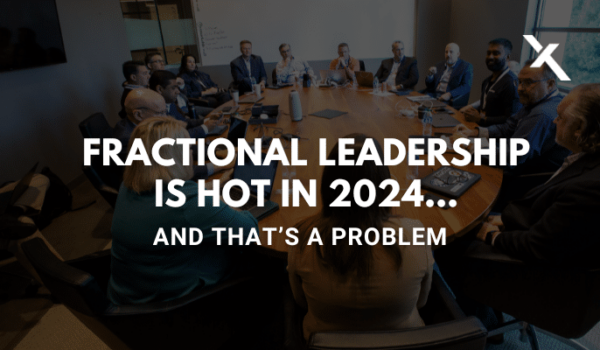
Fractional Leadership is Hot in 2024… and That’s a Problem

Fractional Leadership is Hot… and that’s a problem

Single-shingle freelancers, staffing firms, and online marketplaces are trying to repackage themselves as Executives on Demand

How to Quickly Evaluate the Quality of Fractional Executive Firms

A business blog recently declared, “The Future is Fractional,” and fractional leadership is “in”. 

Startups and growth companies are embracing the concept of leveraging interim, part-time, and project-based leadership. Companies understand that they can upgrade the experience and talent level of key executives and functions while paying less than the loaded salary of a full-time executive. Better to have a fast-moving superstar as your CFO, CTO, COO, CMO, or CHRO for 10 or 20 hours per week, the thinking goes.

The problem is that with an uncertain business climate in 2024, the market is being flooded with freelancers, single-shingle consultants, staffing firms, struggling life coaches, and unemployed middle managers repackaging themselves as fractional executives. 

Here are four ways to quickly evaluate the quality of the fractional executive you’re considering for your business.

1. Define the “Executive” – A manager, director, or vice president is not a c-suite executive. The experience, decision-making, leadership, and skills of successfully guiding multiple organizations through big strategic decisions are very different than being a middle manager or lower-level executive. Unfortunately, a rash of corporate layoffs is pushing many directors and VP-level employees into the consulting ranks. Dig in on bio pages, LinkedIn profiles, and CVs to evaluate the depth of executive experience being presented.

Consultants are notorious for overstating their abilities. Many consultants at prestigious firms will present themselves as serving in an executive capacity; however, many of these people were plucked off the “MBA farm” without ever working inside companies, let alone leading in a C-suite capacity. TechCXO, for example, requires that every one of its partners has demonstrated success as a C-suite executive at multiple organizations. 

Freelancers who may be fine implementers might also present themselves as executives. While good fractional executives are “doers” and solid execution people, they also understand strategy and how initiatives fit into overall objectives, positioning in a competitive landscape, and support a unique value proposition. If you suspect your resource is a freelancer, ask a series of broad-based questions about customer segments, pricing strategies, and delivery channels. Then, listen closely. 

2. Define “Success” – Executives generally agree that the objective of a business is to eventually sell it. When evaluating a fractional executive, look to see if they were integral to a team that had several successful exits, IPOs, capital raises, and other M&A activities. 

The contributions of marketing, sales, product, tech, and HR people may be a bit harder to quantify than an exit, but seek out hard numbers for product launches, customer/revenue increases, profitability, and ways the entire organization was impacted by an executive’s efforts. 

Client quotes and testimonials are great, but they don’t necessarily communicate the scale of the work provided. Instead, look for true use cases and success stories with some level of complexity that took place over a number of quarters. Try to spot truly transformational work that scaled an organization, turned around a stubborn problem, or opened up new markets. Ask if you can speak directly with those clients, too. 

3. Define the “Team” – Small teams or single-shingle consultants may try to hide the scope of their organizations by not publishing team bios. Be on guard for that on the firm’s website. Some unscrupulous marketplace traders who talk about only 2% of their applicants make the cut, use fake bios to present a false sense of scale. They quite literally reuse photos and bios to present a “team.”

Check bios and the breadth of an organization. A level of scale demonstrates success. You don’t want to get caught in a situation where you are relying on a single company founder or one or two principals. They may be a startup organization themselves and all the dangers of time constraints, inadequate bandwidth, cash flow, or other disruptions.

Search and staffing firms may talk about their extensive “networks,” but they are in the business of plugging one or two resources into a hole. That approach does not constitute a team with a bench. Also, executive search and staffing firms are marketplace-brokered resources (found online) vs. referred, vetted, collaborative partner-quality professionals. Many specialty consulting firms are owned by exec search firms offering fractional and interim work, but do not have cross-discipline teams and resources. That can get expensive and blow up the cost-efficiencies you are anticipating.

For example, you don’t want a CFO-level executive handling your Accounts Receivables and Payables. You’re overpaying for that resource. You want to see a mix of talent at different levels and rates that might include a VP of Finance, Controller, Accounting Managers, and AR/AP coordinators.

Similarly, you wouldn’t want a CTO to be doing all your security, development, coding and project management work or your CHRO to directly do your recruiting and compliance work. A team with a blend of talent and rates is a good indicator of a well-established and high-functioning firm that can provide real-time and cost efficiencies.

4. Look for a Variety of Delivery Models – The classic monthly retainer arrangement or project-based pricing is familiar, but they also show a great deal of limitations. Freelancing, staffing, and firms with limited resources and delivery people are often locked into those models. 

A true executive on-demand firm has greater flexibility. It may discount rates up front for warrants and equity on the back end. It may offer a mentoring and coaching model. It may also offer specific, time-constrained training options. 

In a company’s lifecycle, they may need to push hard on recruiting talent but then may need to pivot to lead generation, sales and growth, or perhaps to raise capital. A multi-discipline executive on-demand firm can provide those resources and shift priorities and spending to the client’s needs. 

Fractional leadership may well be “in” for 2024, but for those firms who have been providing this unique model and approach, it’s been in style for decades.

Building a great management team

Oscar Wilde said, “With age comes wisdom.” After working as a CFO for more than 30 years with nearly 100 companies, mostly startups, I’ve begun to identify some of the key early attributes of a topnotch management team. A great management team doesn’t necessarily guarantee success, but without one, you’re almost guaranteed to fail.

Of course, the second part of Wilde’s quote is, “But sometimes age comes alone.” So what are the hallmarks that distinguish a tier-1 management team from others?

The Chief: It starts with the CEO. Experience certainly helps, but there are plenty of outstanding, young CEOs. Successful CEOs rely on their strengths and leverage the strengths of the team around them. In a fundraising pitch, for example, I’ve seen CEOs do nothing more than open and close the meeting. In between, the heads of sales, marketing, product and finance all have a chance to shine and highlights the team.

Hire Great People: I often say that I’ve made a career out of hiring people smarter than I and managing them well. Successful companies and their managers are not afraid to hire A players and they never settle for B players.

Recognition: Great companies highlight and celebrate their successes as a team. “Catch people doing something good”. This might be cash compensation, a call-out at the all-hands company meeting or it could be something with intrinsic value only. At one company, we used a baton to celebrate success. The baton would sit on the recipient’s desk and became a coveted symbol of achievement.

Accountability: Of course, with recognition must come accountability. People need help and coaching if they are not meeting expectations and you can be sure that the rest of the team notices when a teammate is lagging. Holding people accountable for their goals fosters an environment of high achievement and success.

Decision Making: Seek input from a variety of sources but move efficiently to make decisions. Once made, communicate those decisions
clearly and succinctly. Most people are afraid to make decisions, but a leader embraces the challenge and is not afraid to be wrong.

Culture: Perhaps the most important, but the hardest to manage. Culture requires buy-in and starts with the senior management team. Culture is a continuous process that needs to be nurtured. While the management team can help guide the process of building and maintaining a strong culture, they do not have to implement specific programs. There are personality types in every company that help establish company culture. Ask for their advice and allow them to make proposals (e.g. The Fun Committee).

Great management teams operate in an environment of high expectations and welcome candid discussions and feedback. How does your team stack up?

Learn more about Chris Thomajan, TechCXO’s Managing Partner – Boston

Remote Knowledge Workers Digital Theater

Remote Knowledge Workers Increasingly Engage in ‘Pretend Work’ Performances

Hours Wasted Daily on Elaborate Electronic Theater to Satiate Guilt Pangs, Traditional Bosses and Clock Watchers

Return to Work Effort May Make “Digital Clown Shows” Worse

For decades movies, tv and comics portrayed the elaborate masquerades created by office cubicle dwellers pretending to look busy in case the boss walked by.  Many were funny and some iconic because of how much truth they held. In one Dilbert comic, the Pointy-Haired Boss declares, “We need a sense of urgency.” Wally, in a moment of honesty, replies: “I spend most of energy pretending to work, but I can add a layer of fake urgency if you really need it.”

Pretending to work is not new.  However, elaborate presentations in what’s being called ‘productivity theater’ among the 20-30 million US-based remote knowledge workers is becoming an all-new art form in the digital world.  The purpose of these online work plays is to give the appearance of constant and conspicuously visible busyness. 

Favorited tactics of digital presenteeism include:

  • intentionally sending emails in the early morning and late evening 
  • remaining logged on Slack at all hours, 
  • blocking out big swaths of time on fake meetings in Google calendar and 
  • joining irrelevant Zoom meetings with the mic muted and the camera off while doing just about anything else outside the call.

Among those who have continued to work significantly or exclusively via remote, its estimated that an average of 67 minutes per day are spent on these performance antics, according to a new report by software companies Catalog and GitLab. 

Post Labor Day 2022, companies like Apple, Comcast, Prudential Financial and Peloton are nudging employees to return to work, if not completely than at least a couple of days per week. The Wall Street Journal called Labor Day a “line in the corporate sand” which is “the best chance to finally lean on workers to return to the office this year.”

“Pretend to Work Somewhere Else”

 Some companies are shoving rather than nudging. Recently, Elon Musk told employees in a memo they are expected to return to work or “pretend to work somewhere else.” His memo subject was “Remote work is no longer acceptable,”and he wrote, “anyone who wishes to do remote work must be in the office for a minimum (and I mean *minimum*) of 40 hours per week or depart Tesla. This is less than we ask of factory workers.”

Is Work from Home More Productive?

Mr. Musk may have been operating from the old school perspective that working remotely from home is a way to loaf without being seen.

However, a study published in Nature looked at data from 60,000 Microsoft employees and found remote workers were actually more productive for short-term projects. The study did point out those same employees did not perform as well for longer-term projects. A potential cause for that dynamic may be the lack of team interaction and collaboration. 

Also, over time, distractions from family members to pets and errands may become more prevalent for those not accustomed to remote work.

Factory Mentality and Guilt Pangs

For their part, workers say they do feel pangs of guilt if they deviate from a 9-5 routine or take breaks from work with a walk, attending to personal business or just daydreaming.   To compensate for the insecurity that comes with working from home in casual dress, elaborate performances of appearing constantly busy ensue.

These feelings of insecurity or guilt stem from a factory mentality prevalent in the 1980s, according to Cal Newport, who wrote the best-seller Deep Work. The factory mentality attempts to achieve high production by constantly applying effort to a mechanical system, like an assembly line. A plurality of workers say they believe management and company leadership prefer a traditional in-office culture with lots of activity buzzing about.

Many knowledge workers are pushing back. They have come to enjoy benefits of work-at-home, including more work-life balance and quality time with family, and less commuting stress and wasted time.  Apple has again asked employees to return three days per week.  Some of the company’s employees have gone so far to form Slack channels of advocacy groups. Among the largest at Apple with as many as 2,800 members called “Apple Together”  are pushing back against return-to-office plans.

Solutions based in Remote Work Veterans

TechCXO, which provides on-demand executives and teams to companies of all sizes, has been leveraging remote and hybrid work models since its founding in 2003. Their interim and fractional executives  include CFOs, CTOs, CMOs, Heads of Sales, COOs and HR Executives.  These executives on demand are expert and building hybrid teams and delivery models that work for organizations who want flexibility for employees but also want projects and initiatives driven to completion. 

Project Management experts at the firm are frequently incorporated into complex product and IT deliveries that efficiently combine in-person and remote task deliveries and thus eliminating the need for pretend remote performances.  

Source: Microsoft

Some Consulting Starting Salaries Reach 100k

Far be it from us to criticize talented people earning significant compensation. However, we were a little taken back when we read a Wall Street Journal article “Behold, the New Starting Salary for Some Graduates Is $100,000 (March 10, 2022)” detailing how some college seniors were walking from the diploma ceremony into a six-figure starting salary in consulting firms.

Big Salaries for Investment Banking and Tech, Yes, But Consulting?

Wage inflation is real in a tight labor market. Investment banking always draws big bucks and tech firms are getting more aggressive in their courting of talent, particularly for emerging platforms in fintech and cryptocurrency.

Also, as the IPO market has cooled a bit with its most sluggish start in six years, employees who hoped for a future windfall may be looking for more upfront money. But it was this paragraph in WSJ that got us going:

McKinsey & Co. and Boston Consulting Group also bumped their bases to a new floor of $100,000, according to My Consulting Offer, which tracks the sector’s salaries. Rookies at Bain & Co. can expect to make six figures, too, says Keith Bevans, Bain’s global head of recruiting.

The age of the average TechCXO partner and staff skews a bit older in large part due to our value proposition that when you get a fractional or interim TechCXO executive, they have sat in a c-suite chair already. Maybe we’re just a bit resentful of the younger set, but we’ll get over it.

TechCXO Philadelphia

TechCXO Opens Philadelphia Office

Executives On Demand Firm Led Locally by Jim Corr and John Capobianco

TechCXO®, a pioneer and leading provider of industry-relevant, part-time, fractional and interim executives and teams, today announced that it is establishing a Philadelphia presence led by veteran finance executive Jim Corr and growth and operations expert John Capobianco.

TechCXO was recently named to the Inc. 5000 list of the nation’s fastest-growing private companies for the 13th straight year. (View Press Release)

TechCXO was founded in 2003 on the premise that companies can benefit from having the best executive talent available and serving as their CFOs, CEOs, COOs, CMOs, CROs, CSOs, CTOs and other executives on a part-time, interim or fractional basis. Companies can also outsource entire functions to TechCXO, including Finance & Accounting, Operations, HR and Sales and Marketing. TechCXO also provides executive and team coaching support.

Thousands of startup and growth-stage companies have called on TechCXO due to its unique, cost-effective model that enables ready access to top talent without high costs, mandatory long-term commitments or lack of availability.

“Philadelphia is a key market for our expansion plans, and with Jim and John, we have the right people to lead our efforts here,” said Kent Elmer, TechCXO’s Managing Partner. “Not only are they distinguished and effective executives and advisors, they are both terrific networkers focused on building an ecosystem of entrepreneurs, investors and valued service providers.”

“Philadelphia’s entrepreneurial energy is exceptional. The increase in startup investments has been significant, and there is a fast-growing emphasis on innovation in regional industry strengths like fintech, health care and biotech,” said Jim Corr. “In TechCXO, we have a peer network of incredible executives who have successfully led companies as their CEO, COO, CFO, CRO, CTO and other executive roles. The firm’s track record of growth and success is phenomenal. We are ready to begin growing in Philly immediately.”

“There are so many built-in advantages for Philadelphia as a tech hub. There is a robust Incubator, Angel, Venture Capital, and Private Equity Investor network. Then, there’s a world-class education infrastructure of colleges and universities. Rents and housing are relatively low-cost. Young, creative people who come to school here are staying here for the lifestyle,” said John Capobianco. “Couple all that with a culture of hard-work, hustle and grit and you have something special here.”

About TechCXO

TechCXO is a pioneer in providing high potential companies across the country with industry-relevant interim, part-time and fractional executives on-demand. More than 3,000 companies, from startups to the Global 1000, have entrusted TechCXO to help with their critical functions by calling on TechCXO executives as their CFOs, CEOs, COOs, CSO, CTOs, CMOs, CHROs and other executive roles. TechCXO’s major practice areas are: Finance & Accounting, Product & Technology, Revenue Growth, Human Capital and Executive Operations. TechCXO has appeared on the Inc. 500/5000 Fastest Growing Private list every year since 2008. For more information about the firm, please visit https://www.techcxo.com.

Active Listening Quiz: Are You Really Listening as a Leader?

The Leadership Skill You’re Probably Overlooking: Active Listening

How good a listener are you?

The importance of active listening for business applications like customer success and customer experience management is clear: successful companies and executives are attuned to the needs and desires of what customers want. But there are simpler, day-to-day things like team meetings and one-on-one conversations through which the quality of the interactions has an enormous overall effect on important things like employee trust, productivity, corporate culture, and effectiveness of leadership.

Leaders are often poor listeners

Leaders are often the worst among us as listeners as they are so focused on driving growth, meeting numbers and deadlines, and asserting out authority that we often forget that our most valuable resource is our employees. That’s not just a cliché; Our employees usually have the deepest knowledge of our products, services, and customers. They often know more about how our organizations work than we do. They are the ones who can provide the context we need to actually meet our goals. But we can’t learn from them without listening.

Create your own user feedback survey

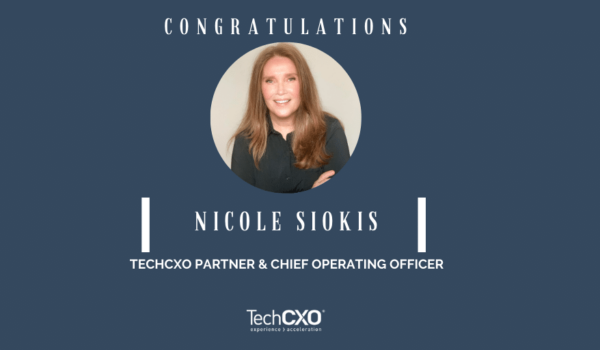
TechCXO Names Nicole Siokis as Chief Operating Officer

TechCXO is pleased to announce that it has named veteran executive Nicole Siokis as Partner, Chief Operating Officer. Ms. Siokis will help guide the firm’s continued nationwide growth and international expansion.

Nicole joined TechCXO in February 2018 and has been focused on organizational structure, internal business process review, and firm profitability. In her new role, she will focus on firm growth by practice area and geography, firm profitability and new strategic initiatives.

Nicole, a US Army combat veteran, previously served as President & Owner of the Atlanta branch for a national strategic workforce solutions firm. She was also an Associate Partner for a well-known executive search firm where she was responsible for strategic partnerships with senior business and HR leaders. In addition, she worked for a major telecommunications company based in Atlanta where she served as Director for Small Business Marketing, as well as Director for Domestic and International Carrier Relations. She is a graduate of Clemson University. (read Nicole Siokis’ full bio).

“Nicole is a very skilled operational executive. She’s highly organized, understands how to motivate and mobilize talented people, while maintaining focus on growth and profitability,” said TechCXO Managing Partner and Co-Founder Kent Elmer. “She’s the perfect combination of skills for what TechCXO needs going forward.”

“We’re entering a new era of expansion and broader services, and Nicole is one of the people we’re relying on to help guide us. It is a pleasure to have her overseeing many of our critical operations,” added TechCXO Co-Founder Mike Casey.

You can read the full press release here

TechCXO Client MemberSuite Raises $11M Series B

TechCXO client MemberSuite raised $11 million of Series B venture funding from lead investor Revolution Ventures on September 26, 2016.   Fidelis Partners, Angel Investment Management, Accomplice Partners and Alerion Ventures also participated.

The company plans to use the funding to add over 50 team members, with a focus on hiring in sales, marketing and engineering in the Atlanta region. With the round, the company has now raised a total of $19.6 million in funding to date.

MemberSuite is a provider of association management software (AMS) for associations and nonprofit organizations. The company develops software that helps trade associations manage fundraising, event planning, accounting, dues-collection and other functions.   It delivers its web-based, back-office software on a subscription basis.  TechCXO partner Todd Guthrie is engaged with MemberSuite.  Read the full release here.


QuikOrder Acquired by Pizza Hut

Congratulations to our client, QuikOrder, for being acquired by Pizza Hut. TechCXO supported QuikOrder with finance and accounting services for close to two years, including M&A support by assisting in due diligence pre-sale and interim CFO services from TechCXO’s Bob Brogan.

QuikOrder, is Chicago-based and a leading online ordering software and service provider for the restaurant industry. Terms of the deal were not disclosed, but it marks one of Pizza Hut’s largest acquisitions to date.

By acquiring QuikOrder’s online ordering capabilities, Pizza Hut U.S. will improve its ability to deliver an easy and personalized online ordering experience and accelerate digital innovation across its base of more than 6,000 restaurants in the U.S. In 2018, approximately half of Pizza Hut U.S. sales were processed through QuikOrder’s platform. Founded in 1997, QuikOrder specializes in developing and maintaining internet-ordering systems used across the QSR industry. It has served Pizza Hut U.S. for nearly two decades. Over that time, it has built an expert team that fully understands and meets Pizza Hut’s specific needs. The acquisition will include: Pizza Hut’s current digital ordering platforms, systems and services and QuikOrder’s in-restaurant technology and ancillary services, as well as its future generation products and programming.

Read more:

Chicago Sun Times
Chicago Business
PRNewswire


techcxo-10-time-fastest-growing
Bob Brogan is a senior Strategy, Operations & Finance executive recognized for identifying and delivering profit-improvement objectives for software as a service, professional services and technology companies.
bob.brogan@techcxo.com
(708) 243-7004
See Bob’s full bio


Peter Biro – Why choose TechCXO?

Why would an accomplished entrepreneur, CFO, Stanford MBA with an engineering degree from Duke choose the TechCXO on-demand executive model for his career? We asked him (Peter Biro).

Peter Biro is an experienced operating and financial executive and entrepreneur with deep experience in enterprises from pre-revenue to $100M. Peter is focused on early-stage infrastructure, software and SaaS businesses in need of assistance in fundraising and transaction execution, scaling their finance and sales operations processes functions, and taking their businesses global.

He specializes in financial transactions, from financings to M&A to optimizing economics of different sales channels, for companies up to $50M in revenue.  He also specializes in assisting Israeli-based technology companies.

He has served in a variety of operating roles in technology companies:

  • CFO of ObserveIT – An Israeli security software company backed by Bain Capital Ventures.
  • VP of Business Development of syndicated data provider Restaurant Sciences (merged with GuestMetrics).
  • COO of of Lyris, Inc. (acquired by Aurea) – A publicly-traded digital marketing software, which he helped create through a number of complementary acquisitions.
  • Co-founder of Five Guys Burgers and Fries – The Northeast’s largest franchise group.
  • Entrepreneur in Residence – General Catalyst Partners. Peter vetted transactions and helped launch Icelandicdata center company, Verne Global.
  • Founder of The Cowper Group – A management consultancy focused on buy-side M&A for middle market technology companies

He began his career in IT on Wall Street.  Peter holds a BSEE from Duke University and an MBA from Stanford.

Robotic Automation Leader and TechCXO Client Soft Robotics Raises $20M

Soft Robotics’ proprietary materials and machines are doing incredible things for food, beverage and advanced manufacturing industries. The company’s innovation allows a robot to grasp and manipulate items of varying size, shape and weight, including a tomato, bagel (see images) and even cupcakes. TechCXO is proud to have assisted Soft Robotics’ capital raise of $20M in an oversubscribed funding round.  Boston-based TechCXO Partner Peter Biro has been assisting Soft Robotics in accounting and finance functions, as well as advising the company on its capital raise.

The following is from Soft Robotics’ press release:

CAMBRIDGE, Mass., May 2, 2018 /PRNewswire/ — Award-winning industrial robotics company Soft Robotics announced today that it has raised $20M in an oversubscribed funding round. The new investors include Scale Venture Partners, Calibrate Ventures, Honeywell Ventures, Tekfen Ventures, Yamaha Motor Co., Ltd., with Hyperplane Venture Capitalleading the round. Existing investors include Material Impact, ABB Technology Ventures, Taylor Farms Ventures and Haiyin Capital. Joining the Board of Directors will be Rory O’Driscoll from Scale Venture Partners and Kevin Dunlap from Calibrate Ventures.

Soft Robotics unlocks robotic automation for large, meaningful markets and labor starved industries such as food and beverage, advanced

Soft Robotics’ machines can grasp delicate items

manufacturing and e-commerce. Leveraging patented material science and AI algorithms, Soft Robotics designs and builds automation solutions and soft robotic gripping systems that can grasp and manipulate items with the same dexterity of the human hand. Since the company’s inception, its technology platform has experienced substantial customer validation and adoption, with over 80% year over year revenue growth and production installations running 24/7 for Fortune 500 companies and Dow 30 components, including Just Born Quality Confections (maker of Peeps).

“We’re proud of the team’s work to date to scale up the Soft Robotics’ technology platform and gain significant commercial traction across our customer verticals, said Soft Robotics CEO Carl Vause. “We’ve been able to address some of our customers’ largest supply chain and automation challenges, from picking and packing fresh produce and raw proteins, to bin picking and retail order fulfillment.”

ABB, a leader in robotics and industrial automation, sees the investment in Soft Robotics as part of ABB’s overall strategy to shape the future of industrial digitalization and the automated warehouse.

“We saw early on that the Soft Robotics solution is a paradigm shift in the way our machines interact with their environment, especially in their ability to grasp deformable, delicate, binned or otherwise complex items,” said Grant Allen, Head of Ventures at ABB Group. “As a leader in industrial manipulation with over 300,000 robots deployed, ABB sees a huge number of amplifying automation solutions but the intuitive control software Soft Robotics has created combined with their agile gripper is a linchpin of the automated warehouse.  In an era of increasingly high mix, low volume production cycles coupled with the need for pain-free automation configurability, we are also extremely excited about the direction Soft Robotics is taking their core technology with SuperPick, allowing ABB arms to do more with less training, greater accuracy and increasing autonomy.”

Soft RoboticsThis funding round comes at a pivotal time in Soft Robotics’ growth. Having proven the economic benefit and scalability of the technology, the company is today at a critical moment of accelerating its commercial penetration plans and new product roadmap.

“As investors we aim to match innovative technologies with major, unmet market needs,” said Rory O’Driscoll, Partner at Scale Venture Partners. “The $40B industrial automation market is large and growing, but largely limited to industries like automotive and semiconductor. Existing rigid robotic technology just doesn’t work for industries such as food and beverage or e-commerce, because of the variability of the product and the unstructured nature of the environment. With so many industries facing mounting pressure to automate, we aren’t surprised that there has been such rapid adoption of Soft Robotics’ technology.”

For more information about Soft Robotics, please visit www.softroboticsinc.com.

About Soft Robotics

Soft Robotics designs and builds soft robotic automation systems that can grasp and manipulate items of varying size, shape and weight. Spun out of the Whitesides Group at Harvard University, Soft Robotics is the only company to be commercializing this groundbreaking and proprietary technology platform. Today, the company is a global enterprise solving previously off-limits automation challenges for customers in food & beverage, advanced manufacturing and e-commerce. Soft Robotics’ engineers are building an ecosystem of robots, control systems, data and machine learning to enable the workplace of the future.

Contact:
Elyse Winer
Company Representative
Phone: (617) 645-5183
ewiner@softroboticsinc.com
www.softroboticsinc.com

Additional News Stories

Cambridge-based Soft Robotics to hire, move HQ following $20M raise

Soft Robotics raises $20 million to expand operations


ESG Investing

The Rise of the Single Company ESG Rating

The Good. The Bad. And Where We (Might) Go From Here

There is no longer any doubt that ESG investing is a major force with estimates now exceeding $20 trillion.  The days of negative screening, excluding “sin stocks” or oil and gas companies, are long past. ESG Integration is now a major focus of Wall Street and with it real progress and some warranted skepticism.

“The Remarkable Rise of ESG” a short piece by George Kell, Forbes, July 11, 2018, does an excellent job of walking through the early days of SRI and how far we have come. More recently “How Socially Responsible Investing Lost It’s Soul” by Rachel Evans, Bloomberg BusinessWeek, December 18, 2018, suggests a wake up call, warning that Wall Street is now, as is predictable, churning out ESG product that will disappoint the likely naïve but well intentioned.  Taking just one aspect of where we are today, the single company ESG rating, this can be used to check our current position on the evolution of ESG investing and help us to project where we are likely headed from here.

As an active participant in risk and quantitative investment analytics the rise of ESG and SRI factors, research and investing has thus far been a captivating journey. With the single company rating it is hard not to be drawn into reflecting back on the headline use of VaR (value at risk) as “the best single measure of risk” (before 2008 that is).  While practitioners knew a single risk measure was not a full answer to any question there was not a lot of effort made to broadly educate and communicate on the known limitations. Vendors pushed their system’s ability to produce a VaR measure, increasing emphasis on a single number as a panacea for a very complex reality. To be fair, with ESG ratings we are not looking at a huge underestimation of potential losses but I think there are some helpful parallels.

There has been a lot written on “the inconsistency” of ESG ratings and how the approach taken by vendor supplied ESG analysis can vary and just how wide the results can be between ratings agencies. CRSHub did a study in 2018 where correlation between company level ESG ratings between two leading vendors was only 0.32 (pretty low vs. 0.90 in their example for Credit Ratings).  These statistics will not surprise practitioners but as in the VaR example this did surprise the majority of investors who had less knowledge/exposure (prior to 2008/9).

Keeping it simple let’s start with positives and potential negatives about a single ESG rating.

The Good

A single score drives more widespread access to ESG analysis, investment decisions for many (retail investors/ wealth management), and revenue growth for most direct participants.  The rising use of the single company ESG score and its use in portfolio or index scores and index creation is telling.  The two largest ESG ratings agencies, MSCI ESG and Sustainalytics are leading and benefiting.  In summary what’s driving the focus on single company ratings comes down to first, “follow the money” but also the fact that – it is the practical first choice today for over 80% of users.

  • Allows more investments and investment decisions to be powered, or partially powered by ESG ratings. Supports creating and marketing products that can be successful with broad audiences.
  • A top-level score is a great first step in a screening process, to bring in names or weed some out. Similarly for monitoring changes. This provides a much improved and sophisticated approach rather than for example screening out by industry (Oil and Gas, Tobacco as an examples).
  • People want easy answers, not lots of data and questions. Looking at individual factors ratings within say the Governance category might just lead to confusion. People struggle when sifting through too much data. So even if a company level ESG rating may be inconsistent with that from another “credible source”, or important underlying factors might be showing specific high risk, the need for an answer wins.
  • Pick your poison – This allows for balance of where companies are doing well and avoids penalizing too much for maybe what hits headlines or could be present in specific underlying ratings or factors.
  • It reduces even bigger inconsistencies potentially in the underlying discrete measures/ factors. The rolled up rating will reduce that noise. Smoothing out the bumps that may annoy or distract people is not a bad thing.
  • Mutes out, at least to a degree, specific known unresolved biases. There are well-documented issues that show problems with ratings related to size, geography, and industry.
  • It gets people using and paying for research/ ratings in general (because they will only use at this level). Creating more revenue for the ratings industry will increase the quality and consistency of the underlying analysis over time. More people looking at top line data drives usage down in the detail by the heavy analytical users.

The Bad

Too much focus on the single rating could lead companies to solely manage to that number/rating. A single rating could hide important information. Instead of bringing more focus to critical issues, the merged score could potentially turn the spotlight off.  If the top-level score ends up being all-important then that is where the focus will be, and taking pressure off specific issues that are impactful (within individual E, S & G topics/ areas).

  • External pressure on companies to address specific shortcomings could actually be reduced. Emphasis on a single topline number/ rating could reduce pressure on companies who are rated low in specific areas – except in the most extreme cases. This gives them the ability to say – “But overall we are doing well, we have to look at the full picture, which we do and …”.
  • Internal resource and financial commitments to address specific shortcomings could be reduced if just the overall rating is what gets attention. The details become less important. Manage to the top-line number.
  • If all incentives are connected to a top-line rating then all actions will be as well. Incentive examples, inclusion in an index, a portfolio, how a company is compared to another for factor/ quantitative inclusion/selection or just an individual comparing two stocks…
    • Investment Managers who had been conducting their own research have often found that their funds don’t score as well as they would expect when scored by ratings firms. AUM could flow away and direct research conducted in-house (away from ratings firms) could be reduced.
    • Investment managers and ESG branded firms that rely on single external ratings could see the lion’s share of AUM growth.
  • Further consolidation and reduction of firms doing ESG research. Specialized “best of breed” ratings firms that only focus on specific issues such as for carbon impacts (within E) would need to partner or be acquired to be a part of producing a single rating. With the importance and value of their research reduced, the overall quality/depth of ESG research available in the market may diminish.
  • Reduces pressure on Ratings firms to increase the quality of their individual factor ratings. Single score can be disconnected, backward looking but more easily momentum building (self fulfilling outperformance).
  • There has been criticism in the credit world of conflicts of interest between the issuer and rating agency. The focus on the single rating could increase the potential of this also leading to conflicts in ESG.
  • Could increase breadth over depth of coverage, presenting a disincentive for providers to increase the depth of research (analysis within categories) and just focus on covering more names.
  • Delays the replacement of overly subjective methodologies not maturing into more structured objective transparent approaches. With less scrutiny on the underlying methodology, the improvement of individual underlying factor scores will be slower.

Looking Ahead

We can expect that the single rating will persist. It’s easy, handy and approachable. It is no doubt a vast improvement over negative screening for example based solely on industry. If as investors and information consumers we are interested but do not want to have to get into the detail, for now this could be just right. Maybe we will see more conversation about the use of single scores for the E, the S, and the G.  Some will argue that the Governance rating should always be on its own and that Social and Environmental have more standing as a combo.

Increasing interest in investment decisions and allocations to ESG Investments will allow for more options and choices, both around what analysis and ratings are produced and what investment opportunities are made available.  The analytics and the investment opportunities don’t have to be totally in sync but it’s best when the mutual support is there and when the two have separation without conflicts.  The rise of the single rating is strategically working for the largest ratings firms, with asset managers creating and marketing new products (ESG boutique firms), and with wealth management and the brokerage industry needing to keep it simple.

The fact that we are seeing criticism (the BusinessWeek article noted above as an example) is a plus.  We can demand and expect continued evolution in how ESG ratings are produced and leveraged.  The current scale and expected growth and inclusion of ESG factors and ratings in investment decision making will push through the current shortcomings that the overuse of the single ESG rating may present.   The investment approaches and ESG products produced and sold today will doubtless be replaced by more sophisticated offerings that are backed up by higher quality data and longer histories as the ratings evolution continues.


  • 1
  • 2
  • Next Page »
TechCXO Logo-Reversed
About TechCXO

People
Clients
Contact & Locations
News

Executive Focus

Finance
Revenue Growth
Product & Technology
Human Capital
Executive Ops

TechCXO HQ

3423 Piedmont Rd., NE
Atlanta, GA 30305

LinkedIn Facebook X

Copyright 2025 TechCXO
Privacy Policy | Accessibility